

Documents to Verify Before Buying Property in Odisha
Table of Contents
- Introduction
- Why Documents Matter More Than Verbal Assurance
- The “Three-Layer Verification” Method for Odisha Homebuyers
- Layer One: Identity, Ownership, and Land Title Documents
- Layer Two: Project Approval, RERA, and Construction Permission Documents
- Layer Three: Financial, Agreement, and Possession Documents
- Odisha Buyer Desk: What to Check for Villas, Apartments, and Plots
- Documents That Reveal Hidden Risk
- How Krishna properties and Developers Approaches Trust and Documentation
- Krishna Downtown, Phulnakhara: Project Reference for Serious Buyers
- Document Verification Questions to Ask During a Site Visit
- Final thoughts
- FAQs
Introduction
Buying a home should feel exciting, but the safest property decision begins quietly, at a table, with documents. A brochure can show lifestyle. A site visit can show space. A sales conversation can explain features. But the real confidence comes when a buyer studies the paper trail behind the property.
For homebuyers in Odisha, especially those comparing property in Bhubaneswar, Phulnakhara, Cuttack Road, or emerging residential pockets near Cuttack, document verification is not a formality. It is the foundation of safe ownership. Whether you are buying a villa, apartment, or plotted property, the documents tell you who owns the land, whether approvals are in place, whether the project is registered, what you are paying for, when possession is expected, and what rights you will receive after purchase.
This blog is created as a practical document-verification desk for serious buyers. It is not legal advice, and every buyer should consult a qualified property lawyer or financial advisor before final booking. However, it will help families understand what to ask, what to read, and what not to ignore before buying property in Odisha.
Why Documents Matter More Than Verbal Assurance
A property purchase often begins with emotion. Families imagine the living room, the children’s room, the balcony, the parking space, the puja corner, the garden, and the future. But real estate is also a high-value legal transaction. If the documents are unclear, the buyer may face problems later even if the property looks attractive today.
Good documentation protects three things: ownership, money, and peace of mind. Ownership means the property can legally be transferred. Money means the amount paid is linked to clear deliverables. Peace of mind means the family does not have to chase unclear approvals, delayed commitments, or disputed terms after booking.
The most careful buyers do not ask only, “How much is the price?” They ask, “What exactly am I buying, who has the right to sell it, what approvals exist, what timeline is promised, and where is it written?” This shift in questioning separates emotional buying from informed buying.
The “Three-Layer Verification” Method for Odisha Homebuyers
Instead of seeing property documents as one confusing bundle, buyers can divide them into three layers. This approach makes the process easier and more practical.
Layer 1: Ownership and Land Clarity
This layer checks whether the seller or developer has the legal right to sell the property. It includes land title, ownership chain, sale deed history, encumbrance certificate, mutation record, khata or revenue records where applicable, and land-use clarity.
Layer 2: Project and Approval Clarity
This layer checks whether the project is planned and approved as claimed. It includes Odisha RERA registration, sanctioned building plan, layout approval, development permission, environmental or fire-related permissions where applicable, and approved specifications.
Layer 3: Buyer Agreement and Payment Clarity
This layer checks what the buyer is agreeing to. It includes booking form, cost sheet, sale agreement, payment schedule, possession timeline, cancellation terms, maintenance terms, bank approval, home loan documents, and final registration process.
Layer One: Identity, Ownership, and Land Title Documents
The first question in any property purchase is simple: does the seller or developer have a clear right over the property? Buyers should not assume this only because the project is advertised professionally. A strong property decision starts by checking ownership documents.
1. Title Deed or Ownership Document
The title deed shows ownership rights over the land or property. Buyers should check whether the title is clear, whether the ownership chain is traceable, and whether the seller has the authority to transfer the property. In case of a developer project, buyers should understand whether the developer owns the land, has development rights, or is working through a joint development agreement.
2. Previous Sale Deeds and Ownership Chain
Property ownership does not begin on the day a buyer books a unit. It has a history. Previous sale deeds help trace how ownership moved from one party to another. A lawyer can review whether the chain is complete and whether any link is missing.
3. Encumbrance Certificate
An encumbrance certificate helps buyers understand whether the property has recorded legal or financial liabilities, such as loans, mortgages, or claims during a given period. It is one of the most important documents in a property documents checklist because it can reveal whether the property is free from certain recorded burdens.
4. Mutation Record and Revenue Details
Mutation records are important because they reflect changes in ownership in revenue records. While mutation alone does not prove ownership, it supports administrative clarity. Buyers should ask whether mutation and related revenue records are updated as per the nature of the property.
5. Khata / Record of Rights / Land-Use Clarity
Depending on the area and property type, buyers may need to check revenue records, khata details, and land-use classification. The purpose is to ensure that the land is suitable for the proposed residential use and that the buyer is not entering into a transaction with unclear land status.

Layer Two: Project Approval, RERA, and Construction Permission Documents
Once ownership clarity is checked, the next layer is project approval. This is especially important for buyers considering apartments, villas in a gated community, or under-construction projects.
1. Odisha RERA / ORERA Registration
For applicable real estate projects, buyers should verify the Odisha RERA registration details. The official ORERA platform is the correct place to check project registration, project information, and updates. Buyers should match the project name, promoter name, registration number, location, layout, timeline, and declared details before booking.
A RERA approved project gives the buyer a structured place to verify key project information. It does not replace personal due diligence, but it creates an important transparency layer. Recent reporting also shows that ORERA has pushed registered developers to update project details on ORERA 2.0 so buyers can access current information such as construction milestones and booking status.
2. Sanctioned Building Plan
The sanctioned building plan shows what has been approved by the competent authority. Buyers should compare the brochure, floor plan, promised amenities, unit layout, road width, open spaces, and common areas with approved documents wherever applicable. Any major mismatch should be clarified in writing.
3. Layout Approval and Development Permission
For plotted developments and villa communities, layout approval is very important. Buyers should check internal roads, plot divisions, common areas, open space allocation, drainage provisions, access roads, and utility planning. A project may look organized on paper, but buyers should ask whether the layout has proper approval from the relevant authority.
4. Completion / Occupancy Documents, If Applicable
For ready or completed properties, buyers should ask whether completion-related or occupancy-related documents are available, depending on the project type and local requirements. These documents indicate whether the building or project has reached a legally recognized completion stage as per applicable norms.

Layer Three: Financial, Agreement, and Possession Documents
Many buyers verify ownership and approvals but ignore the agreement language. This is risky because the agreement decides what the buyer can claim later. Before paying a major amount, buyers should read every line of the booking form, cost sheet, payment schedule, and sale agreement.
1. Detailed Cost Sheet
The cost sheet should clearly mention base price, GST if applicable, registration charges, stamp duty estimate, maintenance deposits, clubhouse or amenity charges, parking charges if any, legal charges, electricity or water connection charges, corpus fund, and any other one-time or recurring amount. A clear cost sheet reduces last-minute surprises.
2. Booking Form and Allotment Letter
The booking form should not be treated casually. It usually records the selected unit, booking amount, project name, buyer details, cancellation terms, and initial commitments. The allotment letter should clearly confirm the unit or villa allotted, size details, payment terms, and key conditions.
3. Sale Agreement / Builder-Buyer Agreement
The sale agreement is one of the most important property documents. Buyers should review possession timeline, delay clauses, payment stages, construction specifications, carpet area or built-up area details, defect liability terms where applicable, cancellation rules, refund process, transfer charges, maintenance handover, and dispute-resolution terms.
4. Bank Approval and Loan Sanction Documents
Bank approval is a useful trust indicator because banks generally check project documents before financing. However, buyers should not depend only on the bank’s approval. They should understand loan eligibility, interest rate, processing fee, disbursement conditions, insurance requirements, foreclosure rules, and EMI comfort.
5. Possession Timeline and Handover Commitments
A possession date should not remain only as verbal confidence. Buyers should check where the possession timeline is written, what happens in case of delay, what is included during handover, and whether any pending work may affect occupancy or daily living.
Odisha Buyer Desk: What to Check for Villas, Apartments, and Plots
Different property types require different document attention. A villa buyer may need to focus more on land, layout, internal roads, utilities, and community maintenance. An apartment buyer may need to focus more on unit carpet area, common area rights, association terms, and occupancy documents. A plot buyer should be extra careful about land title, land use, access road, layout approval, and demarcation.
For Villa Buyers
- Check title and development rights for the land.
- Verify layout approval, internal road planning, open spaces, and utility provisions.
- Read the construction specifications and handover inclusions carefully.
- Ask how maintenance of common areas, lighting, roads, garden spaces, and security will be handled.
- Confirm whether RERA registration is applicable and verify details on the official portal.
For Apartment Buyers
- Check sanctioned building plan, RERA registration, carpet area details, and common area rights.
- Understand parking allocation, association formation, maintenance charges, and handover process.
- Ask for completion or occupancy-related documents if the project is ready for possession.
- Verify whether promised amenities are included in the agreement or only shown in marketing material.
For Plot Buyers
- Verify land title, mutation, land-use classification, layout approval, and access road.
- Check whether the plot has clear demarcation and whether the boundaries match the documents.
- Understand utility access, drainage planning, and future construction permission requirements.
- Avoid plots where ownership, approach road, or conversion status is unclear.
Documents That Reveal Hidden Risk
Some documents are not exciting to read, but they often reveal the biggest risks. Buyers should pay special attention to mismatches, missing pages, unclear clauses, and statements that do not match what was promised verbally.
Risk Signal 1: Different Project Names in Different Documents
If the project name, promoter name, or unit description changes from one document to another, the buyer should ask for clarification. Consistency matters.
Risk Signal 2: Layout Promises Not Reflected in Approvals
If a brochure shows a wide road, clubhouse, garden, or open area, buyers should ask whether the same is reflected in the approved layout or official project details.
Risk Signal 3: Payment Schedule Without Construction Linkage
If payments are demanded without clear construction stages or agreement terms, buyers should understand the risk before committing.
Risk Signal 4: Possession Date Only Spoken Verbally
A timeline matters only when it is recorded properly. Buyers should avoid depending only on verbal assurances regarding possession or handover.
Risk Signal 5: No Clear Cancellation or Refund Terms
Cancellation terms are important even when buyers are confident. Life situations can change, loan approvals can vary, and buyers should know the financial impact before signing.
How Krishna properties and Developers Approaches Trust and Documentation
For Krishna properties and Developers, trust should be understood not only through marketing language but through clarity, communication, quality construction, and timely delivery discipline. The official brand positioning emphasizes timely delivery, expert craftsmanship, smart spaces, and a commitment to excellence. For buyers, this matters because a good developer should make the buying journey easier to understand, not harder.
The company’s journey also supports trust through completed and sold-out milestones. The buyer-facing credibility point is clear: 84 completed and sold out villas across Phase 1 and Phase 2, with Phase 1 having 60 villas and Phase 2 having 24 villas. Out of this journey, 60 villas are already in the process of handover. These points should be used carefully in communication because they show delivery progress without overclaiming future promises.
A serious buyer should still verify documents, visit the site, review written terms, and ask direct questions. A trusted developer will not discourage verification. In fact, transparent documentation helps both the buyer and the developer build a cleaner relationship from booking to handover.
Krishna Downtown, Phulnakhara: Project Reference for Serious Buyers
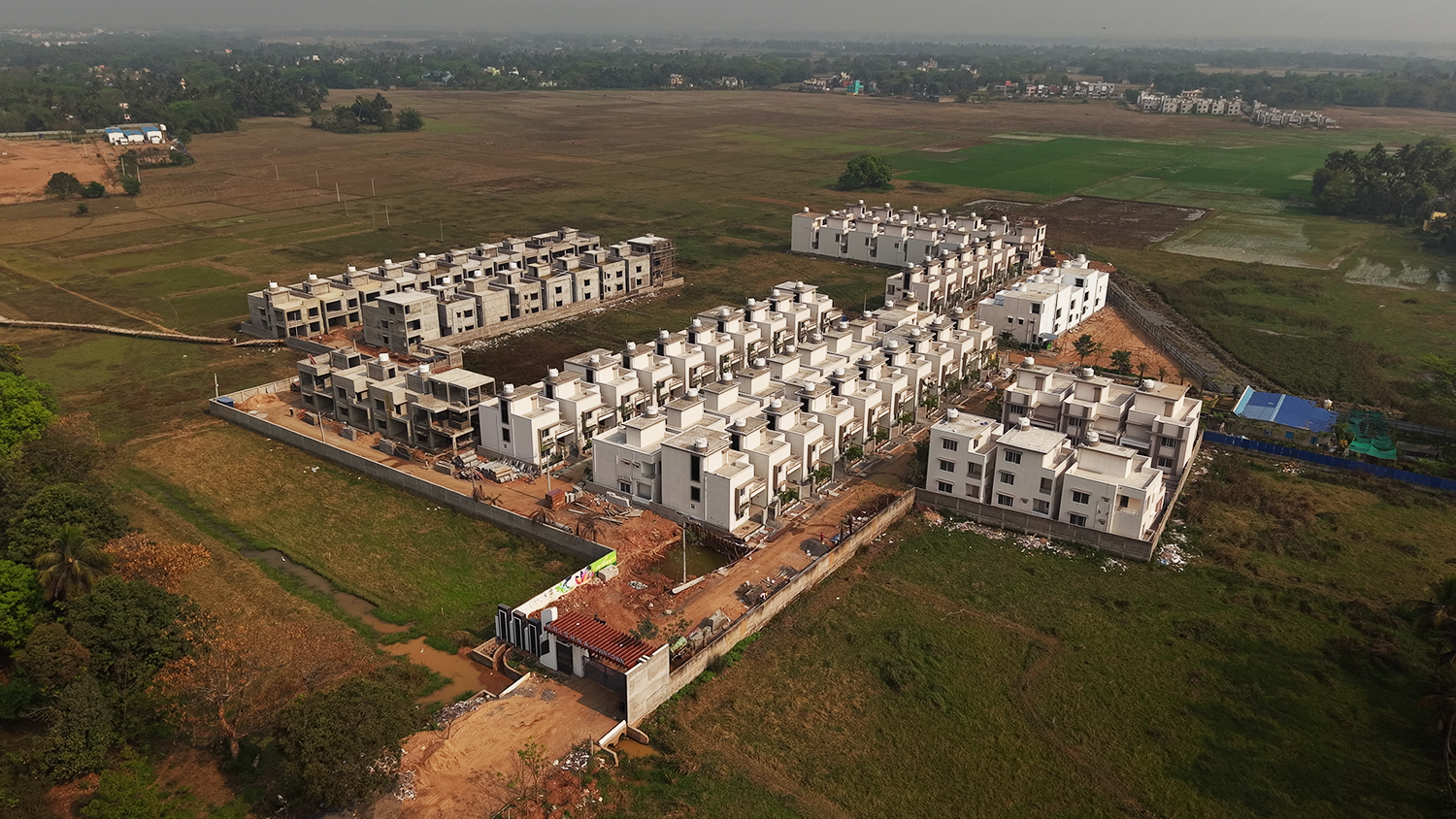
For families exploring premium villas near Bhubaneswar, Krishna Downtown, Phulnakhara can be used as a relevant project reference under Krishna properties and Developers. The official project information presents Krishna Downtown as a gated community offering 3 and 4 BHK villas in Phulnakhara, with internal road planning, open surroundings, amenities, RERA approval, and leading bank approvals.
The project site address near Trinath Bazaar, Phulnakhara also makes location verification easier for buyers planning a physical visit. During the site visit, families should not only look at the villa exterior. They should also ask for RERA details, floor plan, cost sheet, payment schedule, construction specifications, possession terms, and bank approval information.
In short, Krishna Downtown should be explored not only as a lifestyle choice but also as a document-verified property decision. A peaceful family home becomes more meaningful when the paperwork behind it is also clear.
Document Verification Questions to Ask During a Site Visit
A site visit becomes more useful when the buyer carries the right questions. Instead of only asking about price and availability, use the visit to test document clarity.
- Can I verify the project details on the Odisha RERA / ORERA portal?
- What is the exact RERA registration number and promoter name?
- Is the layout shown in the brochure the same as the approved layout?
- Can I review the sanctioned plan and project specifications?
- What is included in the final cost sheet apart from the base price?
- Where is the possession timeline written?
- What happens if there is a delay in handover?
- Which banks have approved the project, and what documents will they require?
- What are the maintenance charges and common area responsibilities?
- What documents will I receive before registration and after registration?
A Simple Buyer File System Before Booking
Before paying a major amount, create a digital and physical file for the property. This simple habit can prevent confusion later.
- Folder 1: Project and RERA documents
- Folder 2: Land/title and approval documents shared by the developer
- Folder 3: Cost sheet, payment schedule, receipts, and bank communication
- Folder 4: Agreement draft, legal review notes, and final signed agreement
- Folder 5: Site visit photos, floor plan, brochure, and written clarifications
Every payment should be connected to a receipt. Every major promise should be connected to a written document. Every uncertainty should be clarified before signing. This habit makes the buyer more confident and the transaction more professional.
Final Thoughts
Documents may not look as attractive as a villa elevation, garden image, or clubhouse render, but they decide the safety of the purchase. A smart homebuyer in Odisha should verify ownership, title, approvals, RERA registration, cost sheet, agreement terms, possession timeline, and handover commitments before booking.
For buyers exploring property in Odisha, especially property near Bhubaneswar and Cuttack, document verification should be treated as a non-negotiable step. It protects the family from unclear commitments, hidden charges, ownership doubts, and future stress.
Krishna properties and Developers, with Krishna Downtown, Phulnakhara as a relevant project reference, should be presented through a trust-first approach: quality construction, timely delivery, verified project details, clear communication, and site visit encouragement. The right property decision is not made by emotion alone. It is made when lifestyle, location, construction, and documentation all support each other.
FAQs
1. What documents should I verify before buying property in Odisha?
Before buying property in Odisha, verify title deed, ownership chain, encumbrance certificate, mutation record, land-use clarity, approved building plan, RERA registration where applicable, cost sheet, sale agreement, payment schedule, possession timeline, and bank approval details.
2. Is Odisha RERA verification necessary before buying a home?
Yes. If the project is required to be registered under RERA, buyers should verify project details on the official Odisha RERA / ORERA portal before booking. RERA verification supports transparency but should be combined with legal and financial due diligence.
3. What is the most important document before buying a villa?
For a villa, important documents include land title, development rights, layout approval, sanctioned plan, RERA registration where applicable, construction specifications, sale agreement, cost sheet, and possession timeline.
4. Should I rely only on bank approval for property safety?
No. Bank approval is useful, but it should not be the only verification. Buyers should still check title, RERA, approvals, agreement terms, cost details, and legal review with a qualified professional.
5. What should I check in the sale agreement?
Check possession timeline, payment schedule, delay clause, cancellation terms, refund process, property specifications, carpet or built-up area details, maintenance terms, defect liability terms where applicable, and dispute-resolution terms.
6. Can I buy property without checking the encumbrance certificate?
It is risky to ignore the encumbrance certificate. This document helps identify recorded liabilities such as mortgages or claims for a specified period. Buyers should ask a lawyer to review it along with other ownership documents.
7. What documents should NRIs check before buying property in Odisha?
NRIs should check title deed, RERA registration where applicable, approved plans, power of attorney terms if someone is acting on their behalf, tax implications, FEMA-related guidance, bank loan rules, and agreement terms with legal support.
8.Is Krishna Downtown, Phulnakhara RERA approved?
The official Krishna Downtown project page mentions RERA approval and project details. Buyers should verify the RERA registration directly on the official Odisha RERA / ORERA portal before making a booking decision.

Krishna Developers
Planning to buy a villa near Bhubaneswar?
- Explore Krishna Downtown, Phulnakhara, a premium gated villa community designed for families who value space, peace, greenery, and connectivity.
- Connect with the Krishna Developers team to understand project details, location advantages, RERA information, and site visit options.