
Registration Is Done. What Happens Next?
A Post-Purchase Property Checklist for Odisha Homebuyers.

Table of Contents
- Introduction
- What Should You Do After Property Registration in Odisha?
- Step 1: Secure the Final Registered Sale Deed and Registration Trail
- Step 2: Confirm That the Mutation Case Has Actually Been Initiated
- Step 3: Verify the Updated RoR on Bhulekh Odisha
- Step 4: Run a Three-Record Identity Check
- Step 5: Decide Whether You Need a Fresh Encumbrance / Transaction Record
- Step 6: Update the Correct Local Property-Tax Record
- Step 7: Move Electricity and Other Utility Records Into the Right Name
- Step 8: Close the Tax and Home-Loan Paper Trail
- Step 9: Build a Property Vault Before the Documents Scatter
- FAQ
Introduction
The signatures are complete. The biometrics are done. The registered sale deed is finally in your name.
For many buyers, this is the moment when the property file is closed, placed in a cupboard and forgotten.
But from an ownership-management point of view, property registration in Odisha is better treated as the start of a short follow-up sequence—not the final administrative step.
The reason is simple: different systems record different parts of your ownership journey. The registration office preserves the registered transaction. The revenue system deals with mutation and RoR. A municipality or other local body may maintain a property-tax or holding record. The electricity distributor maintains the consumer account. Your lender may hold original documents. Your income-tax paperwork may have its own closing steps.
The useful question after registration is therefore not:
“Do I own the property now?”
It is:
“Have all the records that will matter later been updated, checked and safely stored?”
What Should You Do After Property Registration in Odisha?
After registration, a buyer should typically secure the final deed, track the mutation case, verify the updated RoR on Bhulekh Odisha, check property identifiers across records, update the appropriate local tax and utility accounts, close any applicable tax/home-loan paperwork, and build one permanent property document archive.
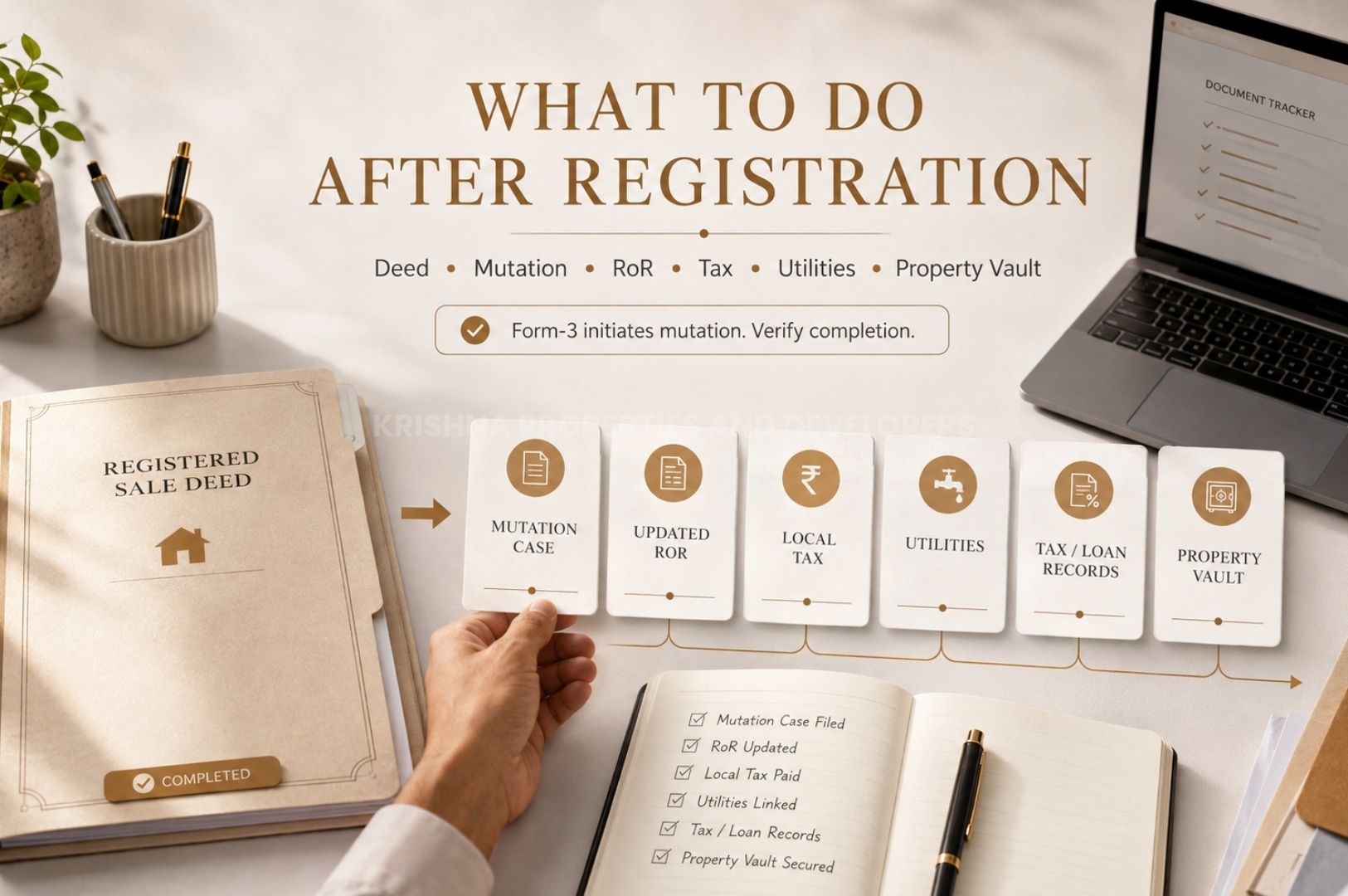
Odisha has an important digital advantage: the Inspector General of Registration states that after a sale deed is registered, digitised Form-3 is transmitted to the Tahasil office for initiation of mutation and correction of the RoR. That automated handoff is helpful—but buyers should still track whether the case has actually reached completion.
Step 1: Secure the Final Registered Sale Deed and Registration Trail
Do not leave the registration process with only photographs of signatures or a payment screenshot.
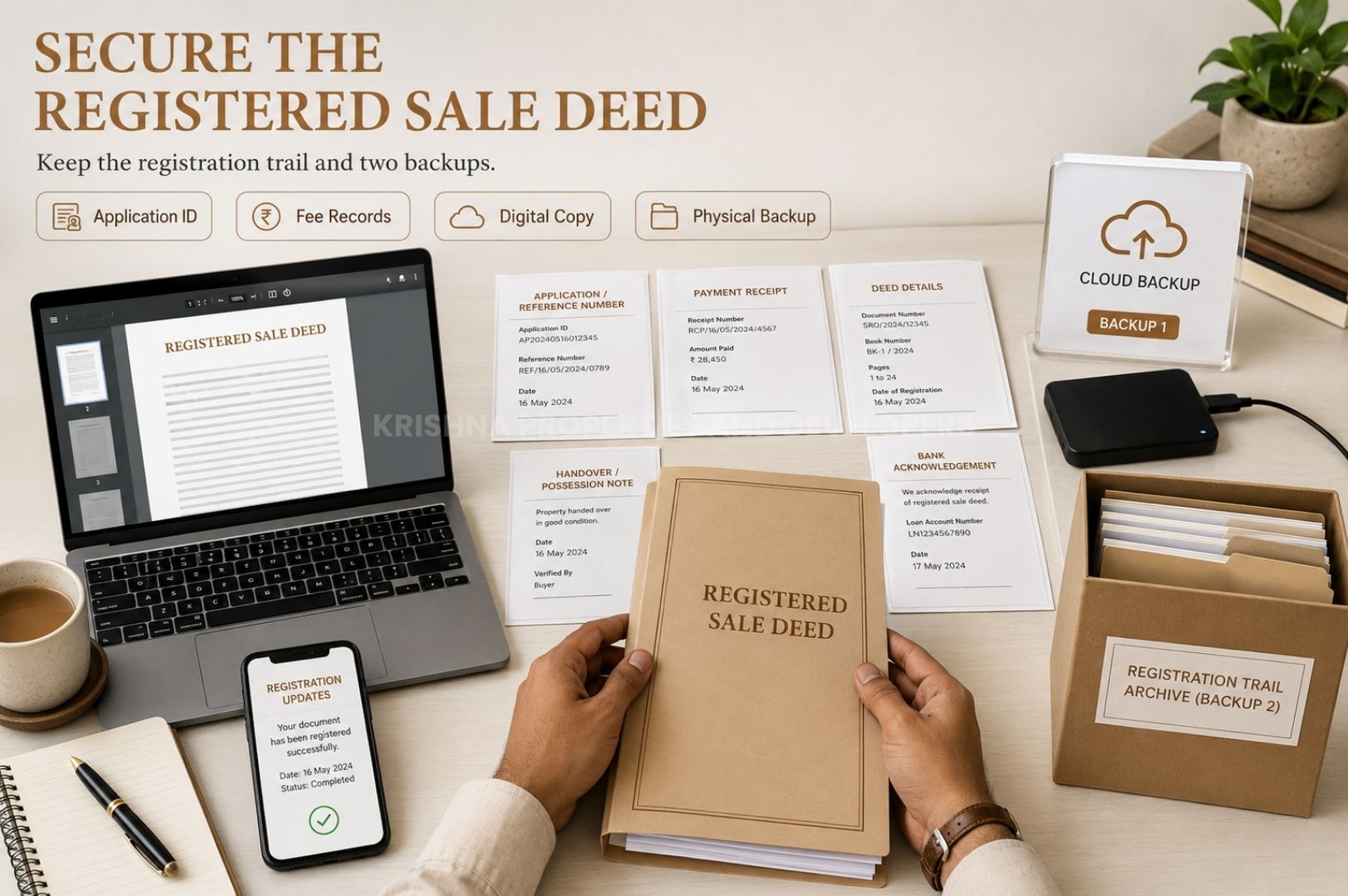
Your first post-registration task is to create a clean record of the registered sale deed and the registration transaction itself.
The Odisha IGR portal states that after registration, the registered deed can be handed to the applicant or downloaded through the application-status route; the portal can also send a link associated with the application ID by SMS.
Keep, as applicable:
- Final registered deed / digitally available final copy
- Registration ID or application/reference number
- Stamp-duty and registration-fee payment records
- Endorsement / registration details appearing on the deed
- Any possession or handover document separately issued for the property
- Loan disbursement / bank-document acknowledgement, if financed
Then make two different backups: one secure digital copy and one separate physical or offline copy. Avoid keeping the only readable scan inside a messaging app.
Step 2: Confirm That the Mutation Case Has Actually Been Initiated
This is where one of the most searched post-registration terms appears: property mutation Odisha.
In Odisha, the registration and Tahasil systems are integrated. Official IGR guidance says that immediately after registration of a sale deed, Form-3 is transmitted from the registration office to the Tahasil office to initiate the mutation case and change the RoR. The same official page lists a service timeline of 7 days for an uncontested mutation case and 30 days for a contested mutation case.
The key word is initiate.
An automated handoff should not be interpreted as permission to stop checking. Record the mutation case/reference details when available and monitor the case until the outcome and updated record are visible.
A useful buyer note is:
Registration completed → mutation initiated → mutation disposed → RoR verified.
Those are separate checkpoints.

Step 3: Verify the Updated RoR on Bhulekh Odisha
Once the mutation process is completed, verify the corresponding RoR Odisha record rather than assuming every field is correct.
The official Bhulekh Odisha portal allows land details to be checked using district, Tahasil and village details and also through Khatiyan number, plot number or tenant details. It also allows plot/map-related views.
When the updated record is available, compare at least:
- Owner / tenant name and spelling
- Khata / Khatiyan number
- Plot number
- Area / share details relevant to the transaction
- Village / Tahasil / district identifiers
- Any other field that should correspond with your registered property schedule
Do not “correct” a mismatch by assumption. If something does not align, preserve the evidence and contact the appropriate Tahasil/revenue office or a qualified property professional for the correct rectification route.
Step 4: Run a Three-Record Identity Check
A surprisingly useful exercise after property registration in Odisha is to put three records side by side:
- The registered sale deed
- The updated RoR / Bhulekh record
- Your possession, allotment, project or property schedule documents, as applicable
Now check whether the identifiers tell the same story.
| Field to Compare | Why It Matters |
| Buyer / owner name | Spelling differences can create friction in later applications. |
| Plot / property identifier | Helps ensure every record refers to the same property. |
| Area / share | Important where the transaction involves defined land/share details. |
| Location description | District, Tahasil, village, project/unit details should not create avoidable ambiguity. |
| Registration reference | Useful for future certified-copy, EC or legal/document searches. |
This is not a title opinion or legal certification. It is a record-consistency check—the sort of simple administrative discipline that can save hours later.
Step 5: Decide Whether You Need a Fresh Encumbrance / Transaction Record
Another high-interest search is encumbrance certificate Odisha.
The Odisha IGR portal provides an Online Encumbrance Certificate service, and the official service-timeline page lists 7 days for issue of an Encumbrance Certificate.
A fresh EC immediately after every purchase is not a universal rule that applies to every buyer. But an updated transaction/encumbrance record can be useful where your lender, lawyer, future transaction, record audit or personal document system requires it.
If you obtain one, check that the search period and property identifiers are appropriate for the purpose. Also remember that an EC, the registered sale deed and the RoR serve different record functions; do not treat one document as a substitute for all the others.
Step 6: Update the Correct Local Property-Tax Record
The next common search—especially for city buyers—is property tax Bhubaneswar or “holding tax name change.”
The first step is not filling a form. It is identifying the correct local jurisdiction for the property.
If a property falls within Bhubaneswar Municipal Corporation jurisdiction, BMC/Bhubaneswar citizen services provide Property / Holding Tax search, assessment and payment functions. The BMC declaration form itself asks for details such as plot number, Khata number, district, Tahasil and holding information.
But do not assume that every property marketed as “near Bhubaneswar” falls under BMC. Phulnakhara and adjoining areas must be checked against the actual local-body/revenue jurisdiction of the specific property.
Your checklist should therefore say:
- Identify the correct municipality / NAC / panchayat / local authority as applicable
- Check whether a holding/property account already exists
- Ask what ownership/name-change or fresh-assessment process applies
- Keep the acknowledgement and future tax receipts with the property file
Step 7: Move Electricity and Other Utility Records Into the Right Name
An ownership record can be correct while the electricity bill still carries the previous consumer’s name.
For electricity name transfer in Odisha, the OERC supply-code material published by TPCODL states that a service connection may be transferred following change in ownership/occupancy. It describes an application for change of consumer name along with the latest bill paid in full and proof of ownership/occupancy; it also addresses NOC/security-deposit treatment.
Practical post-purchase checks include:
- Confirm which electricity distribution company serves the exact property
- Check whether the existing account has outstanding dues before/at transfer
- Apply for change of consumer name using the current prescribed process
- Keep the application number, latest paid bill and final updated consumer record
- For water, maintenance, broadband, gas or other services, identify the actual provider and follow its ownership/consumer-update process where applicable
The goal is not cosmetic name matching. It is to reduce future confusion about who is the recorded consumer responsible for the service account.
Step 8: Close the Tax and Home-Loan Paper Trail
This is the section where outdated internet advice can create problems.
Many search results still tell property buyers to file Form 26QB for TDS on an immovable-property transaction. But the Income Tax Department’s current 2026 guidance says that for relevant transactions where the credit/payment event occurred on or after 1 April 2026, a new unified Form 141 is used under the Income-tax Act, 2025; legacy challan-cum-TDS forms such as 26QB continue for events on or before 31 March 2026.
That makes one rule especially important for an August 2026 buyer:
Do not blindly follow an old “Form 26QB property purchase” tutorial without checking the transaction date and current Income Tax Department process.
If tax deduction/reporting applied to your transaction, retain the relevant challan/statement/payment evidence and use the current income-tax workflow. Complex or joint-buyer/joint-seller transactions should be checked with a qualified tax professional.
If the property was financed, also create a bank-document inventory:
- Which originals are with the lender?
- What certified/scanned copies do you possess?
- What loan account and disbursement records should be retained?
- Where are insurance or loan-protection documents, if any?
- What will be required when the loan is eventually closed?
A simple signed or bank-generated acknowledgement of originals retained can be extremely useful years later.
Step 9: Build a Property Vault Before the Documents Scatter
The final step is not a government form. It is information management.
Create one permanent property document file with the same folder structure in physical and digital form.
Folder | What to Store |
01 · Registration | Registered deed, registration reference, fee/stamp records, certified copies |
02 · Revenue | Mutation reference/order, RoR Odisha, Bhulekh extracts/maps |
03 · Tax / Local Body | Holding/property assessment, ownership update, tax receipts |
04 · Utilities | Electricity name-transfer record, water/other service records where applicable |
05 · Loan / Income Tax | Loan papers, document inventory, current TDS/challan/statement records where applicable |
06 · Project / Handover | Possession letter, handover sheet, warranties, approvals/documents supplied to buyer |
07 · Maintenance | Maintenance receipts, association/RWA documents, service records |
08 · Evidence | Property photographs at handover, meter readings, key correspondence |
FAQ
Is mutation automatic after property registration in Odisha?
Is mutation automatic after property registration in Odisha?
Odisha IGR states that after registration of a sale deed, digitised Form-3 is transmitted to the Tahasil office for initiation of the mutation case and RoR correction. Buyers should still track the case through disposal and verify the updated RoR rather than assuming initiation equals completion.
How long does property mutation take in Odisha?
The Odisha IGR Ease of Doing Business page lists 7 days for disposal of an uncontested mutation case and 30 days for a contested mutation case. Individual cases should be tracked using the current official process because status and case circumstances can differ.
How can I check my RoR after mutation in Odisha?
Use the official Bhulekh Odisha portal. Its FAQ says land details can be searched using district, Tahasil and village information or through Khatiyan number, plot number or tenant details.
Do I need an Encumbrance Certificate again after registration?
Not every buyer needs a fresh EC immediately for the same purpose. However, an updated encumbrance certificate Odisha record can be useful when required by a lender, lawyer, later transaction or your own document audit. The IGR Odisha portal provides an online EC service.
How do I update property tax after buying a home in Bhubaneswar?
First verify the property’s local jurisdiction. For properties within BMC, Bhubaneswar One/BMC provides Property & Holding Tax services. A property merely described as “near Bhubaneswar” should not automatically be assumed to fall within BMC.
How do I transfer the electricity connection after buying property in Odisha?
Current OERC supply-code material provides for name transfer after change in ownership/occupancy. The process includes an application, latest paid bill and proof of ownership/occupancy, with additional rules around NOC/security deposit. Always use the current procedure of the electricity distributor serving the exact property.
Is Form 26QB still used for property TDS in August 2026?
The Income Tax Department says that for specified transactions where credit/payment occurred on or after 1 April 2026, the new unified Form 141 is used; the older challan-cum-statement forms, including Form 26QB, continue for relevant events on or before 31 March 2026. Check the transaction date and current tax guidance, and use a qualified professional where necessary.
Which property documents should I keep permanently?
At minimum, maintain a structured archive of the registered sale deed, mutation/RoR records, tax/local-body records, utility ownership records, loan/tax documents, possession/handover papers and important maintenance/warranty records applicable to your property.

Krishna Developers
Planning to buy a villa near Bhubaneswar?
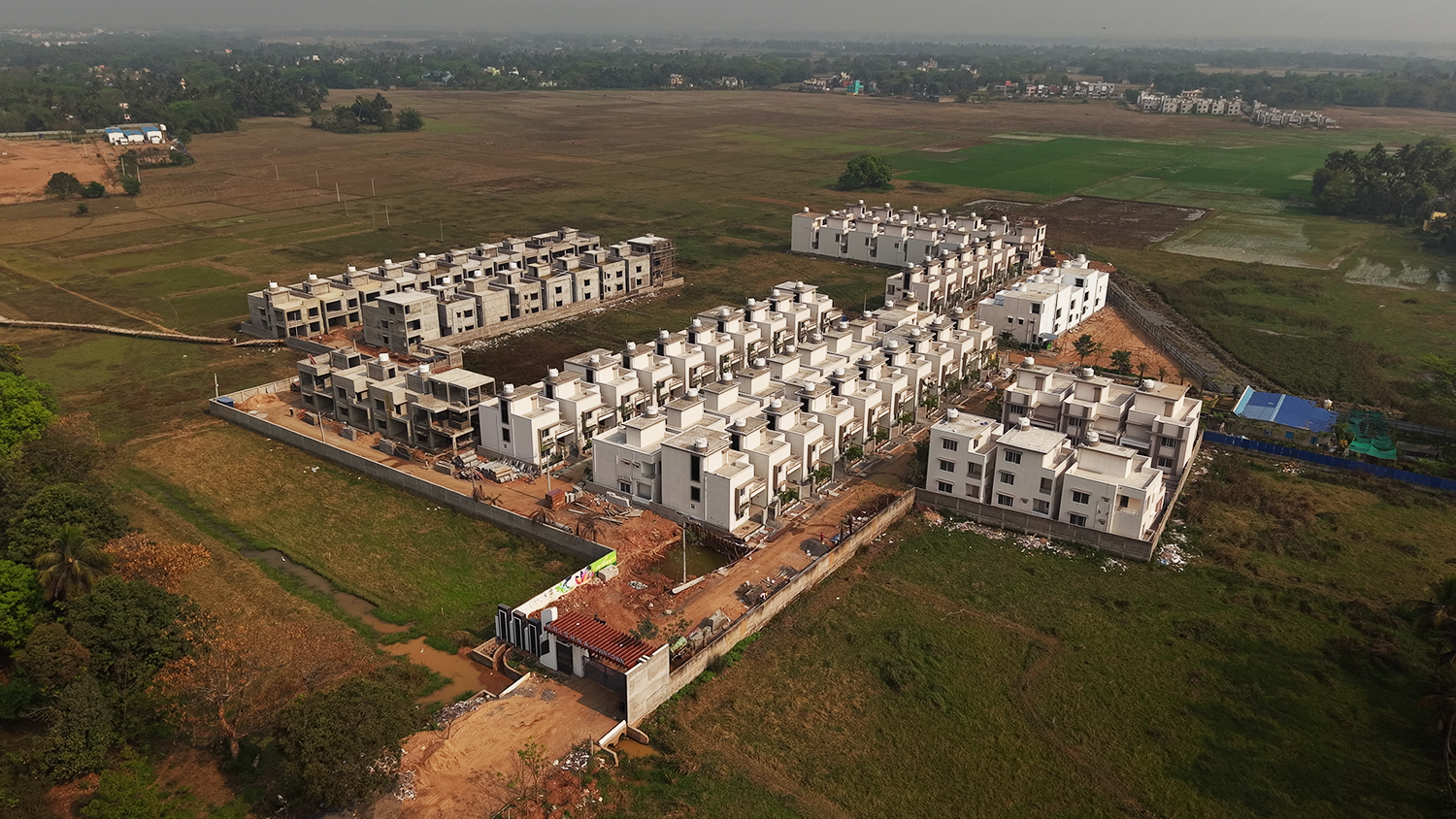
- Explore Krishna Downtown, Phulnakhara, a premium gated villa community designed for families who value space, peace, greenery, and connectivity.
- Connect with the Krishna Developers team to understand project details, location advantages, RERA information, and site visit options.