
Construction Quality Checklist for Homebuyers in Odisha
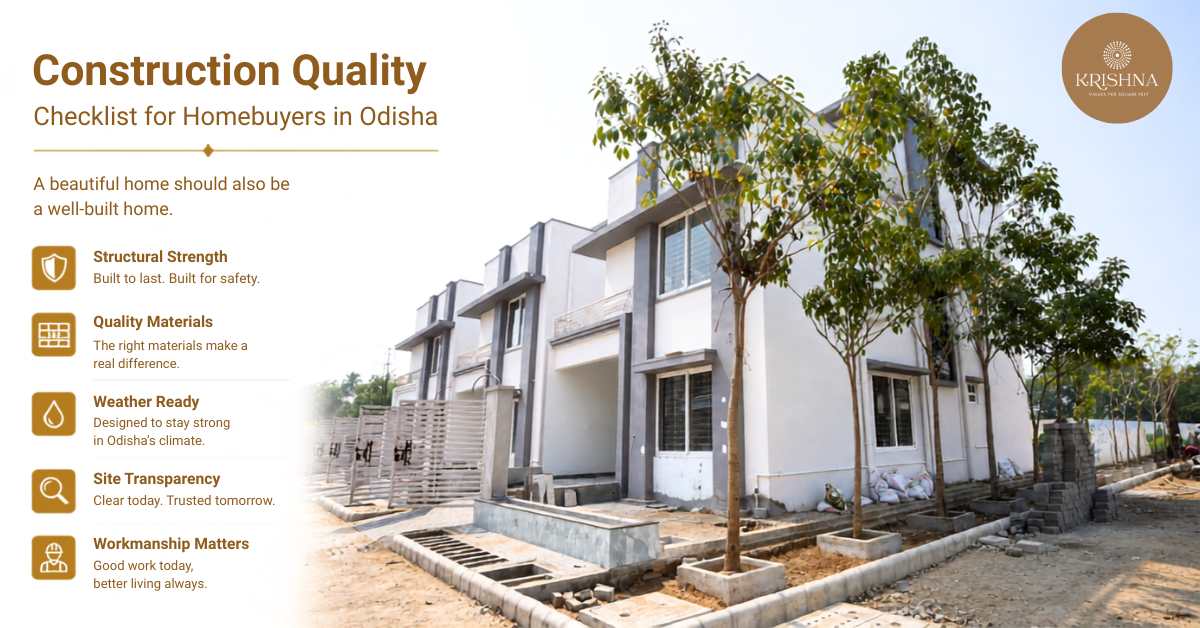
Table of Contents
- Introduction
- Why construction quality becomes visible only after you ask the right questions
- The 5-sense site inspection method for homebuyers
- Check 1: Structure and civil work
- Check 2: Waterproofing and drainage
- Check 3: Wall finish, flooring, doors, and windows
- Check 4: Electrical, plumbing, and hidden service lines
- Check 5: Road, common area, and community-level execution
- Check 6: Documentation that supports construction claims
- What buyers should ask during a Krishna properties and Developers site visit
- How Krishna Downtown fits this quality discussion
- Final thoughts
- FAQs
Introduction: A Beautiful Home Should Also Be a Well-Built Home
When a family visits a new home for the first time, the eyes usually go to the visible things first: the elevation, tiles, lights, balcony, paint colour, kitchen space, and the overall feeling of the home. These details matter, but they are not the full story. A home is not only a design decision. It is also an engineering decision, a safety decision, and a long-term comfort decision.
For homebuyers in Odisha, especially those comparing a villa, duplex, or apartment near Bhubaneswar, construction quality should be checked with patience. Odisha has heat, humidity, heavy monsoon periods, drainage pressure in growing locations, and daily usage patterns that test a building over time. A home that looks good on possession day should also remain comfortable, strong, and easy to maintain years later.
This blog is written as a practical construction quality checklist. It is not a technical manual for engineers. It is a simple buyer guide that helps families ask better questions during a site visit, understand what to observe, and know where quality usually hides. For Krishna properties and Developers, this topic is important because trust in real estate is built not only through brochures, but through construction clarity, site transparency, and buyer confidence.
Why Construction Quality Becomes Visible Only After You Ask the Right Questions
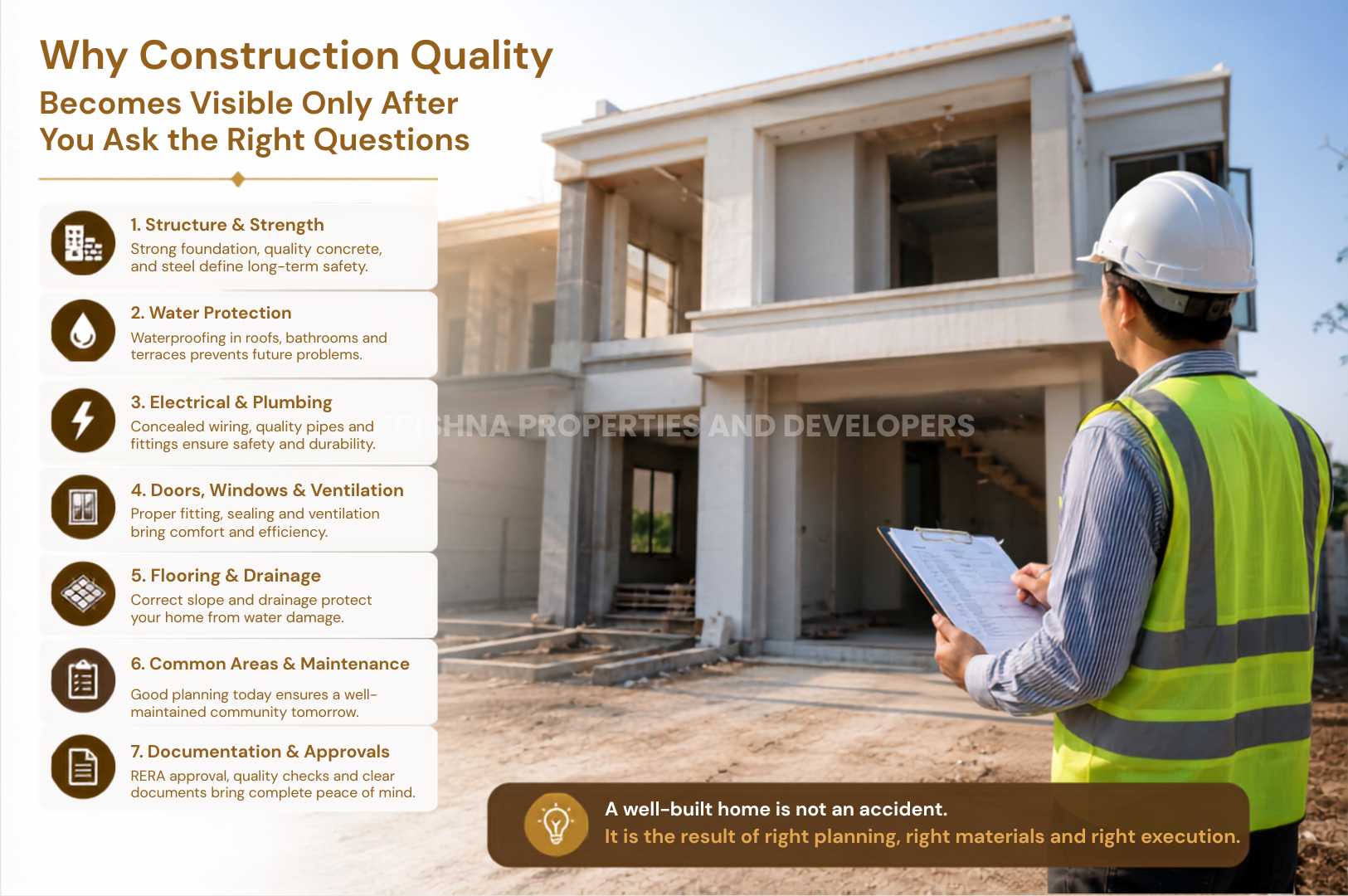
Most buyers notice the surface. Experienced buyers notice the system behind the surface. The difference is important. A polished wall can hide poor plaster. A beautiful bathroom can still have weak waterproofing. A wide room can still have poor ventilation. A premium entrance can still fail if internal roads, drainage, and maintenance planning are ignored.
That is why construction quality should be checked in layers. First, buyers should understand the basic structure. Then they should look at water protection, electrical and plumbing lines, door-window fitting, flooring slope, common area planning, and documentation. Every layer tells something about how carefully the home has been planned and executed.
A serious homebuyer does not need to behave like a site engineer. But a buyer should not remain fully dependent on marketing language either. The right approach is simple: observe, ask, verify, and then decide.
The 5-Sense Site Inspection Method for Homebuyers
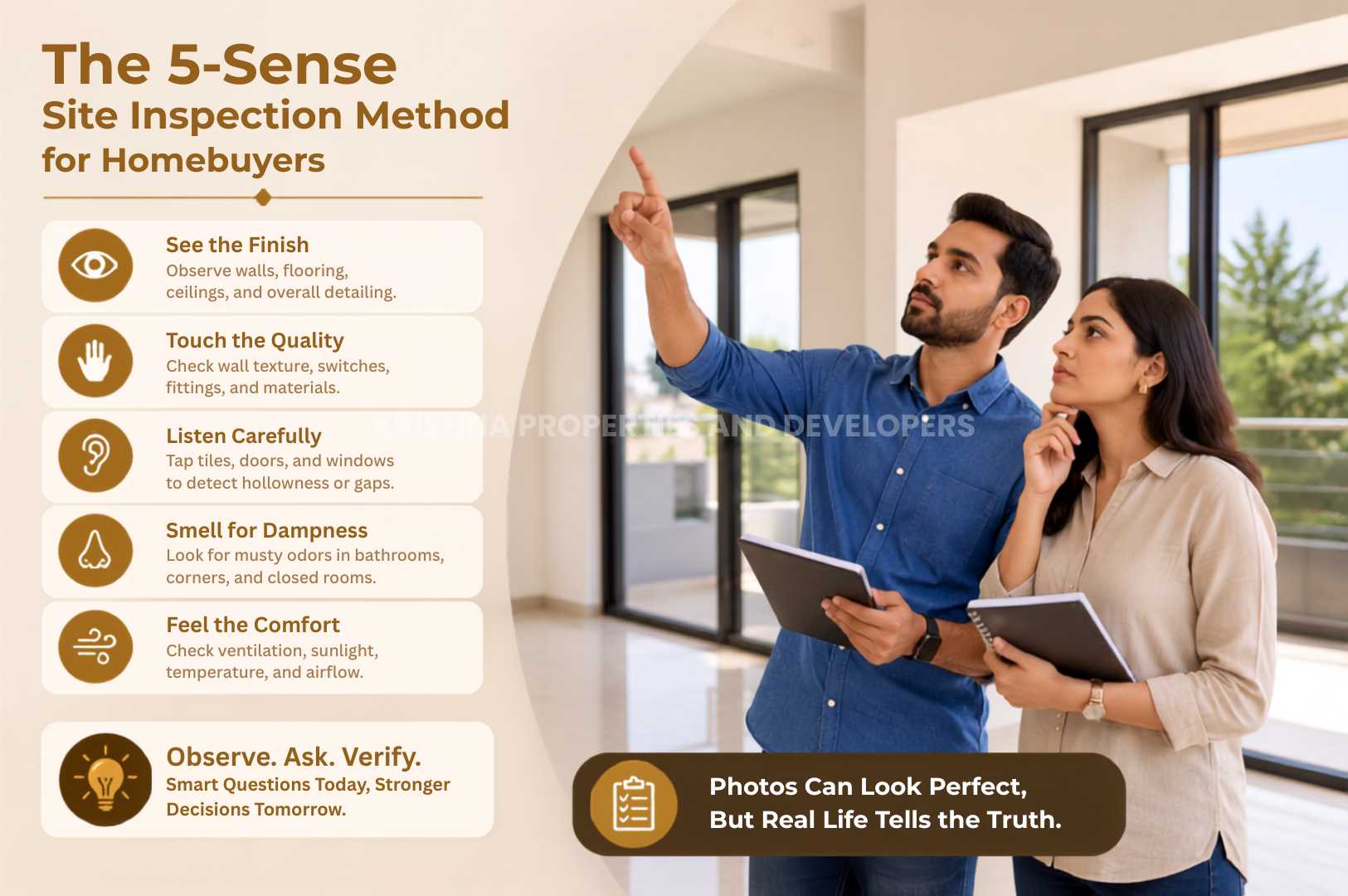
Instead of reading only a long checklist, use a simple five-sense method when visiting a project. See the finish. Touch the walls and fittings. Listen for hollow sounds in tiles or doors. Smell for dampness in closed rooms. Feel the air movement, heat, and comfort inside the home. This method helps buyers notice what photographs usually hide.
For example, a room may look spacious in a photo, but during a site visit you may feel poor ventilation. A bathroom may look complete, but damp smell near the wall can indicate possible moisture issues. A corridor may look clean, but poor slope can create water collection after rain. A buyer who observes slowly will understand more than a buyer who only walks through quickly.
Carry a notebook during the site visit. Write questions immediately. Ask the project team to explain unclear points. Take permission before taking photos or videos. If possible, visit during daylight and after rain because natural light and water movement reveal many quality details.
Check 1: Structure and Civil Work - The Part You Cannot Repaint Later
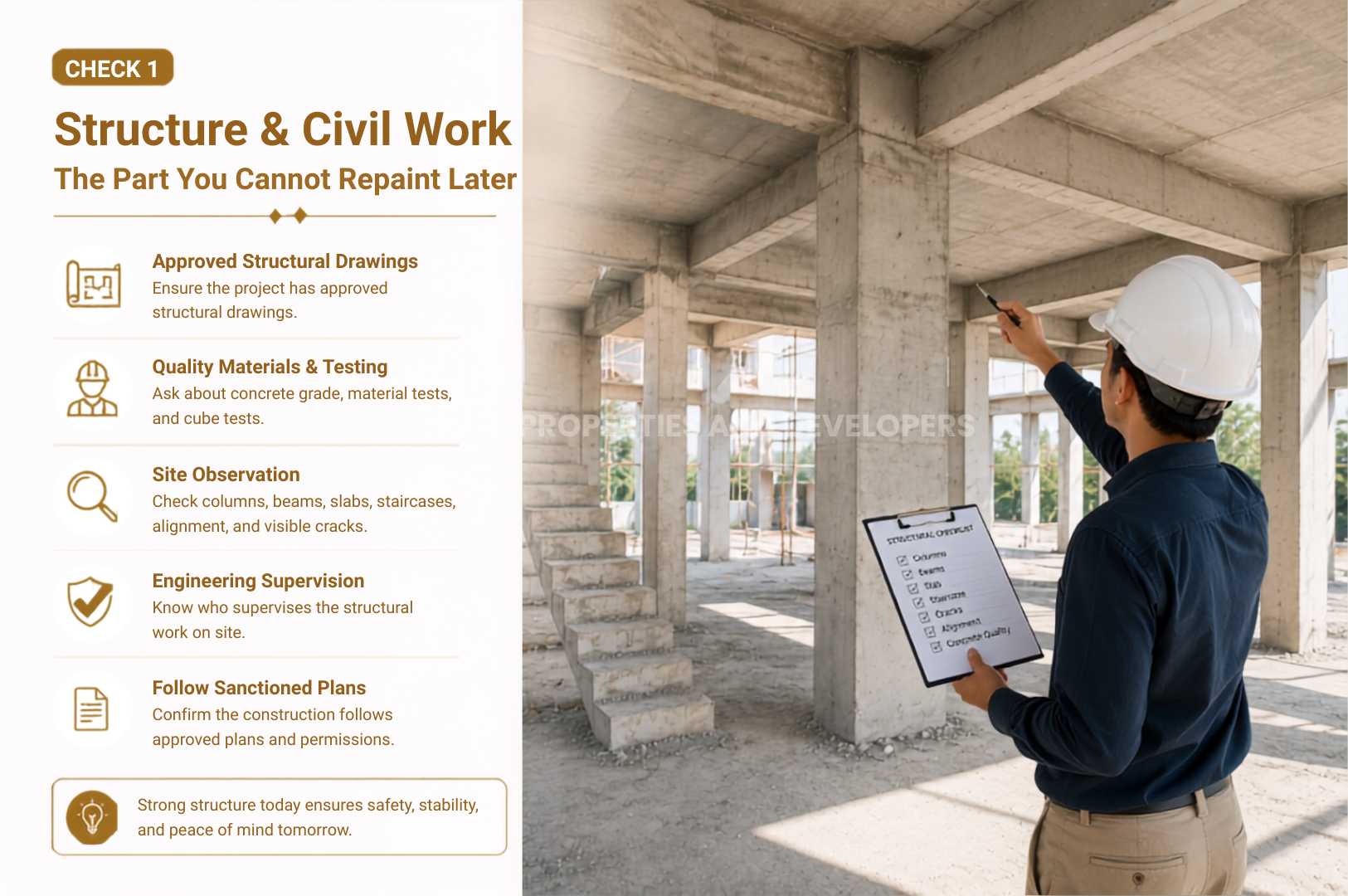
Structural quality is the most important part of any home because it cannot be corrected casually after possession. Buyers do not need to calculate structural design, but they should ask whether the project has approved structural drawings, qualified engineering involvement, and proper quality checks during construction.
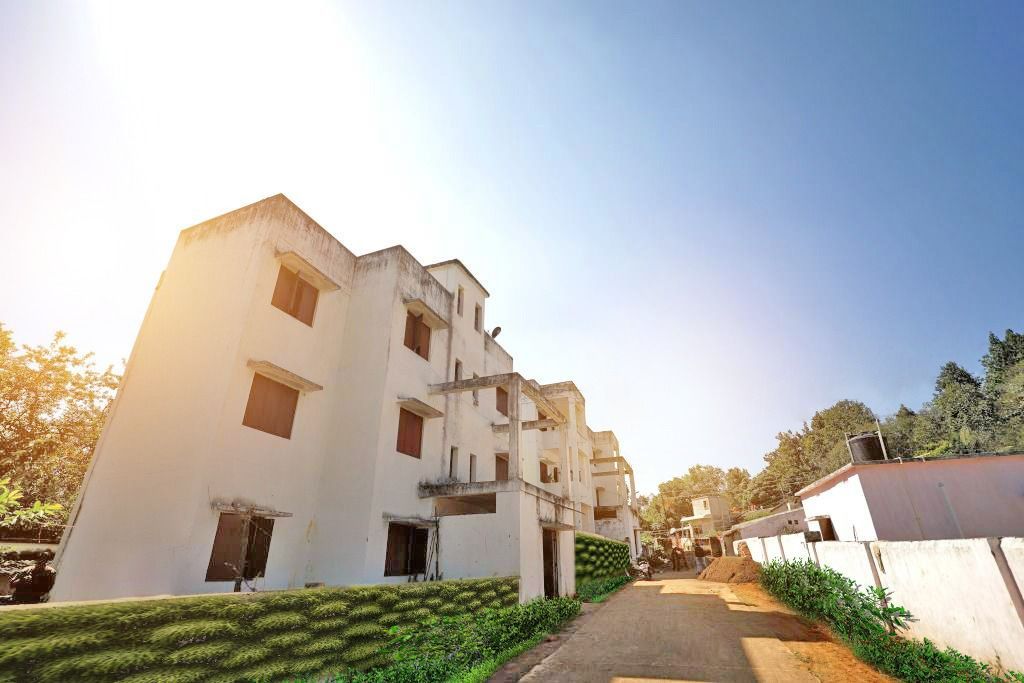
During a site visit, observe columns, beams, slab edges, staircase alignment, visible cracks, uneven surfaces, and signs of careless patchwork. Small hairline cracks in plaster may happen due to finishing or curing, but wider cracks, repeated cracks, diagonal cracks near openings, or damp cracks should be discussed with the technical team. Do not ignore them only because the wall is newly painted.
Ask simple questions: What grade of concrete was used? Were cube tests or material tests conducted? Who supervises structural work? Are structural drawings available for verification? Has the project followed sanctioned plans? A professional developer should be comfortable answering construction-related questions in a clear way.
Check 2: Waterproofing and Drainage - Odisha Weather Makes This Non-Negotiable
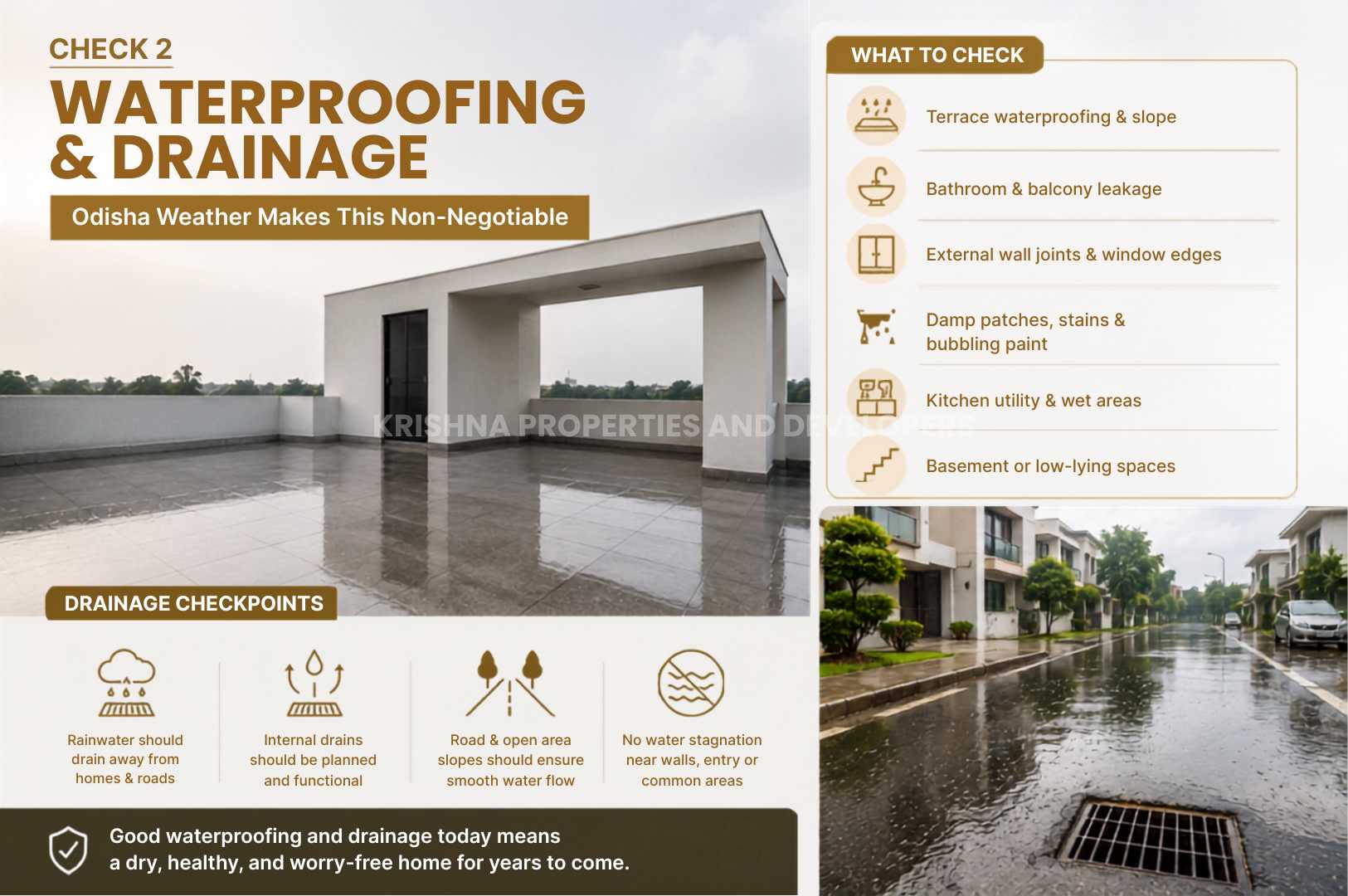
In Odisha, waterproofing is not a small finishing item. It directly affects comfort, maintenance cost, and long-term satisfaction. Heavy rain, humidity, and water exposure can quickly reveal weak terrace waterproofing, bathroom leakage, balcony seepage, roof slope issues, and poor external wall protection.
Homebuyers should check terrace areas, balconies, bathroom walls, kitchen utility zones, window edges, external wall joints, and basement or low-lying spaces where applicable. Look for damp patches, bubbling paint, salt-like white marks, water stains, uneven slope, or dark corners. These signs should be discussed before booking or possession.
Drainage is equally important. Water should move away from the home and common areas, not stand near walls, roads, or entry points. In a villa project in Odisha, buyers should ask how rainwater is managed, how internal drains are planned, and whether the slope of roads and open areas supports smooth water flow. This is one area where a site visit after rain can be very useful.
Check 3: Wall Finish, Flooring, Doors, and Windows
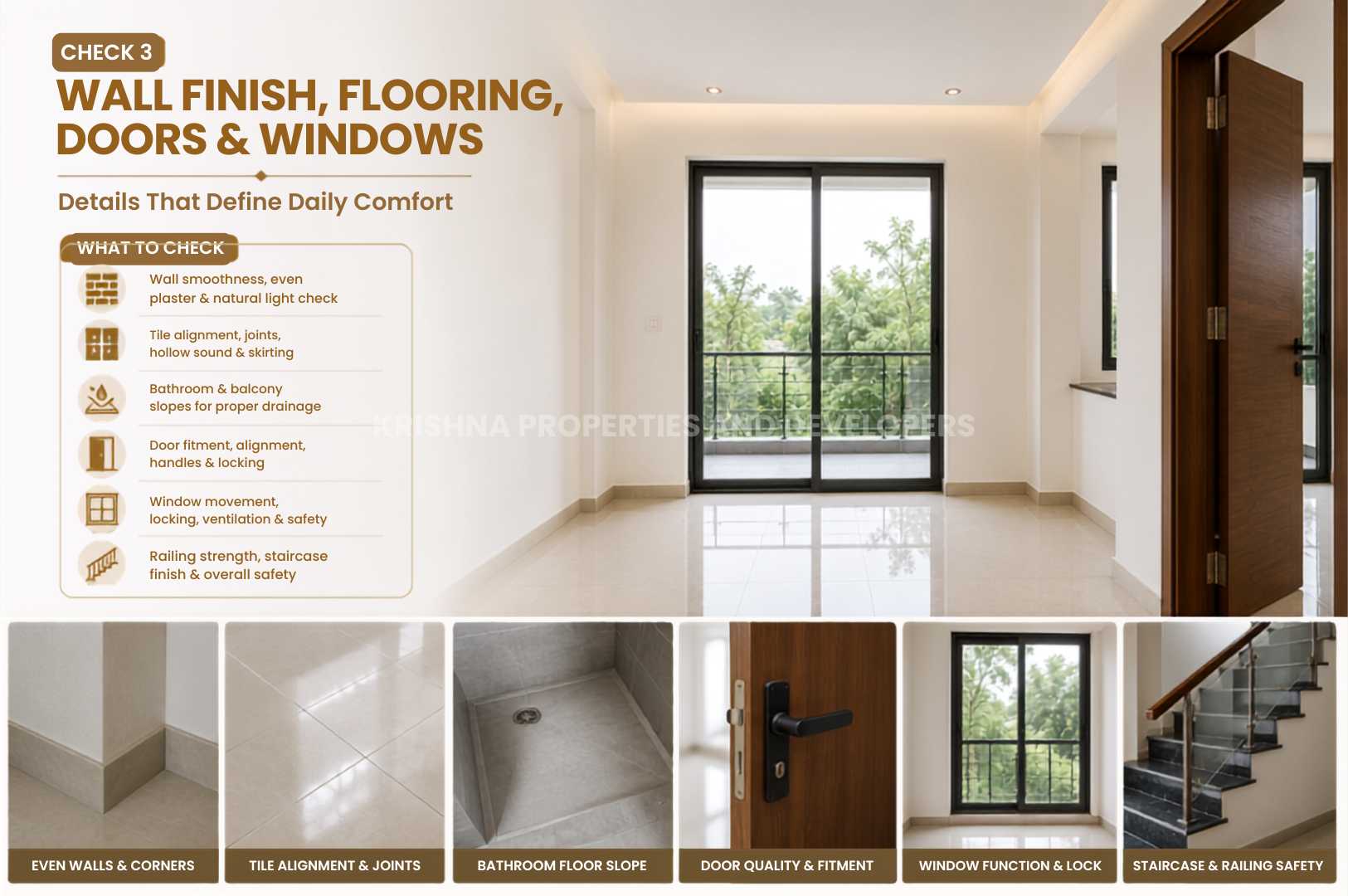
Finishing quality is where many buyers begin their inspection, and it deserves attention. Good finishing is not only about beauty. It affects cleaning, durability, safety, and daily comfort. Uneven walls, poor tile alignment, weak skirting, rough paint edges, loose handles, and badly fitted windows can reduce the living experience even when the structure is strong.
Check walls under natural light because artificial light can hide uneven plaster. Observe corners, ceiling lines, tile joints, bathroom slopes, balcony slopes, and floor level transitions. Tap a few floor tiles gently with permission; hollow sound may indicate poor fixing in some cases. Open and close doors and windows to see whether they move smoothly without friction.
Also check the quality of railings, staircase finish, balcony safety, window locking, door frame alignment, and ventilation points. A home used by children and elders needs finishing that is not only premium-looking but also practical and safe.
Check 4: Electrical, Plumbing, and Hidden Service Lines
Electrical and plumbing systems remain hidden after finishing, but they affect daily life every single day. Buyers should check whether switchboards are positioned conveniently, whether enough plug points are available, whether kitchen and appliance points are planned well, and whether the electrical layout supports modern family use.
For plumbing, check water pressure, bathroom fittings, floor trap position, drainage flow, kitchen sink planning, utility area, and any visible leakage. Ask what pipe brands or specifications are being used if the project is still under construction. In ready or near-ready homes, open taps and check water movement where possible.
Hidden services should not be treated casually. A beautiful home with poor electrical or plumbing planning can create repeated repair work. Before final purchase, buyers should ask for clarity on electrical load, backup provisions if any, water supply planning, drainage connection, and maintenance responsibility.
Check 5: Road, Common Area, and Community-Level Execution
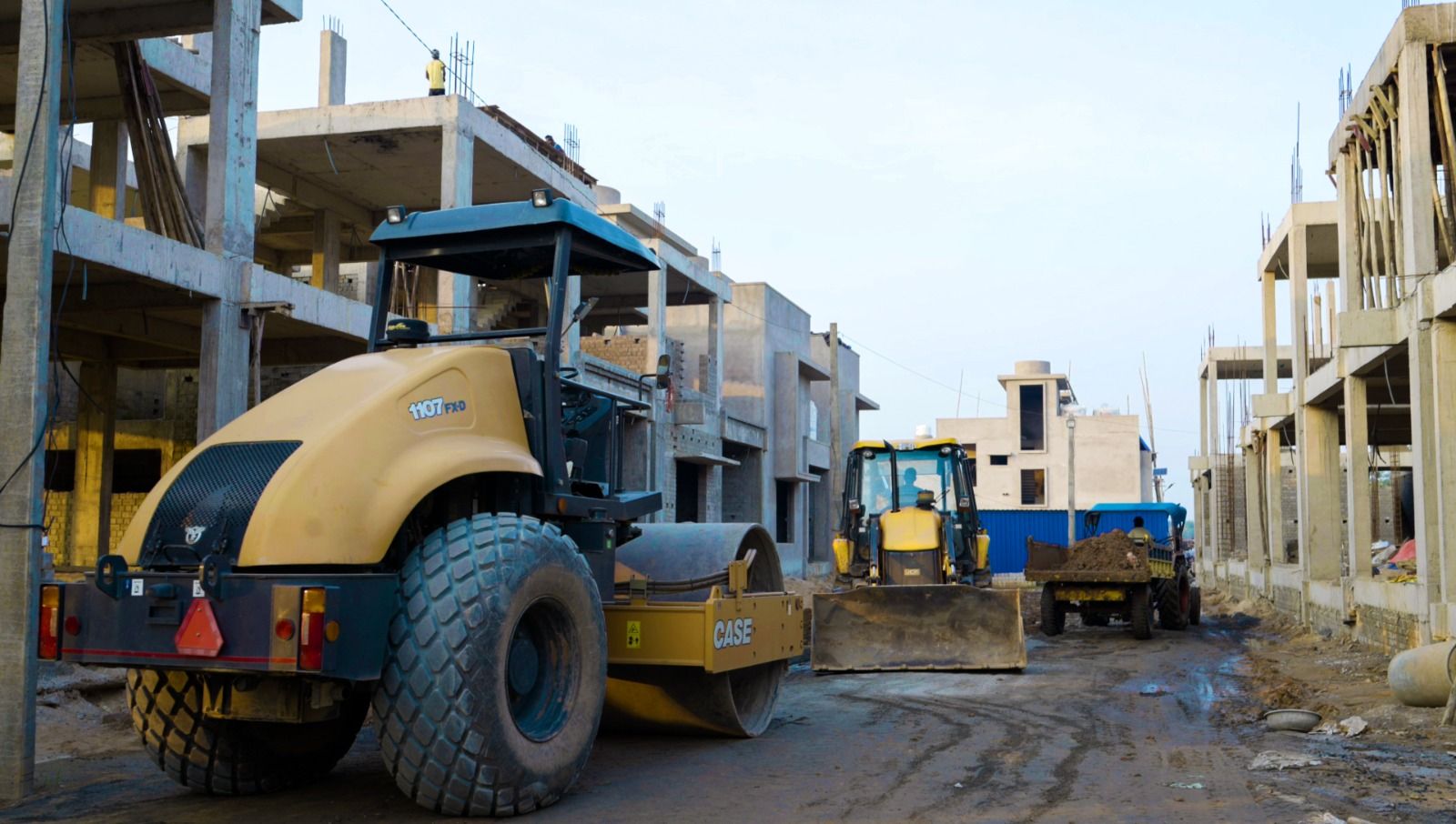
Construction quality is not limited to the house. In a gated villa community, the quality of roads, drains, open spaces, lighting, boundary work, entry gate, common areas, and service planning matters as much as the individual unit. These are the spaces that every resident uses daily.
For villa buyers, internal roads should feel practical for two-way movement, visitor movement, emergency access, and daily parking comfort. Streetlights should be planned properly. Open spaces should not feel like leftover land. Drainage should be part of the site plan, not an afterthought. The entrance should be easy to use, not only attractive in the brochure.
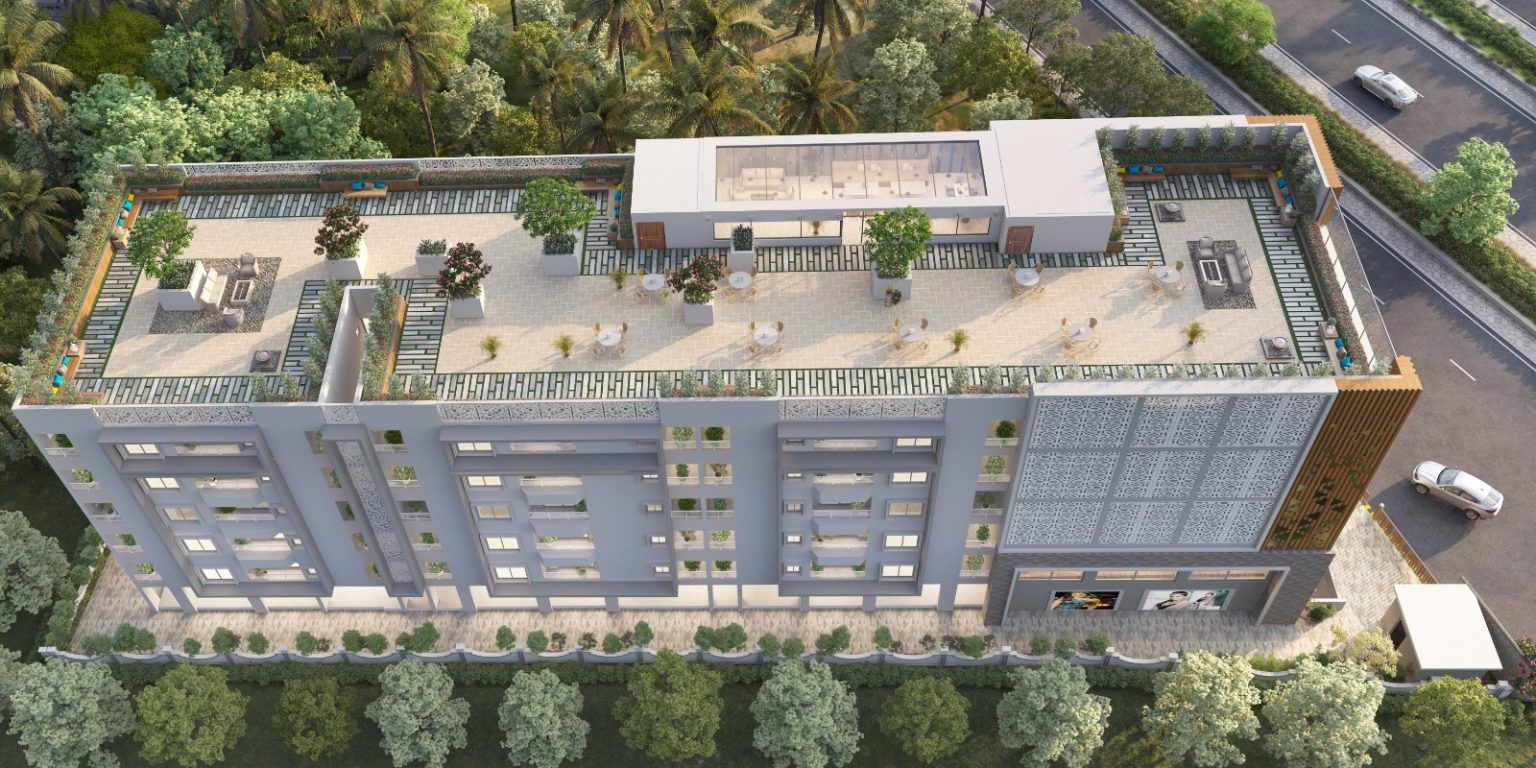
Krishna Downtown, Phulnakhara mentions 40 feet internal roads, gated community planning, amenities, and project-level approvals on its official project communication. For buyers, these points are useful only when they are checked physically at site and understood in relation to daily living, maintenance, and safety.
Check 6: Documentation That Supports Construction Claims
Quality should also be supported by documents. A buyer should verify RERA registration, sanctioned plan, project approvals, agreement terms, specifications, payment schedule, possession timeline, and bank approval details where applicable. Documentation gives structure to promises.
Recent buyer-awareness reports have repeatedly highlighted why RERA verification, approved plans, builder track record, title clarity, and construction quality checks are important before buying an under-construction home. Buyers should use the Odisha RERA portal to verify project details instead of relying only on screenshots, social media ads, or verbal statements.
For any RERA-approved project, buyers should compare what is promised in marketing material with what is disclosed in official documents. If there is a mismatch, ask questions before paying. Good documentation reduces confusion and protects the buyer from avoidable surprises.
What Buyers Should Ask During a Krishna properties and Developers Site Visit
A site visit should not be only a tour. It should be a conversation. When visiting any Krishna properties and Developers project, buyers can ask practical questions that reveal the seriousness of planning and execution.
Ask about the construction stage, materials, quality checks, waterproofing method, drainage planning, electrical and plumbing provisions, internal road execution, common area maintenance, RERA details, bank approval, payment milestones, and possession process. Also ask what will be covered during handover and what defects, if any, will be handled after possession.
The goal is not to create pressure. The goal is to make the buying decision clear. A professional real estate team should welcome informed buyers because informed buyers understand value better.
How Krishna Downtown Fits This Quality Discussion
Krishna Downtown in Phulnakhara can be used as a relevant project reference for families studying villa quality near Bhubaneswar. The project is positioned around 3 and 4 BHK villas, gated community living, open surroundings, amenities, 40 feet internal roads, RERA approval, bank approval, and a location near Trinath Bazaar, Phulnakhara.
For Krishna properties and Developers, the larger brand trust comes from quality construction, transparent communication, and timely delivery. The company has also communicated its completed and sold-out villa milestone of 84 villas, with Phase 1 having 60 villas and Phase 2 having 24 villas, along with 60 villas already in the process of handover. This detail should be used as a credibility point only where relevant, not as a replacement for buyer verification.
Even when a project looks promising, buyers should still visit the site, review documents, compare layout with lifestyle needs, and ask direct quality questions. A good project becomes stronger when buyers can see, understand, and verify what they are buying.
Final Thoughts
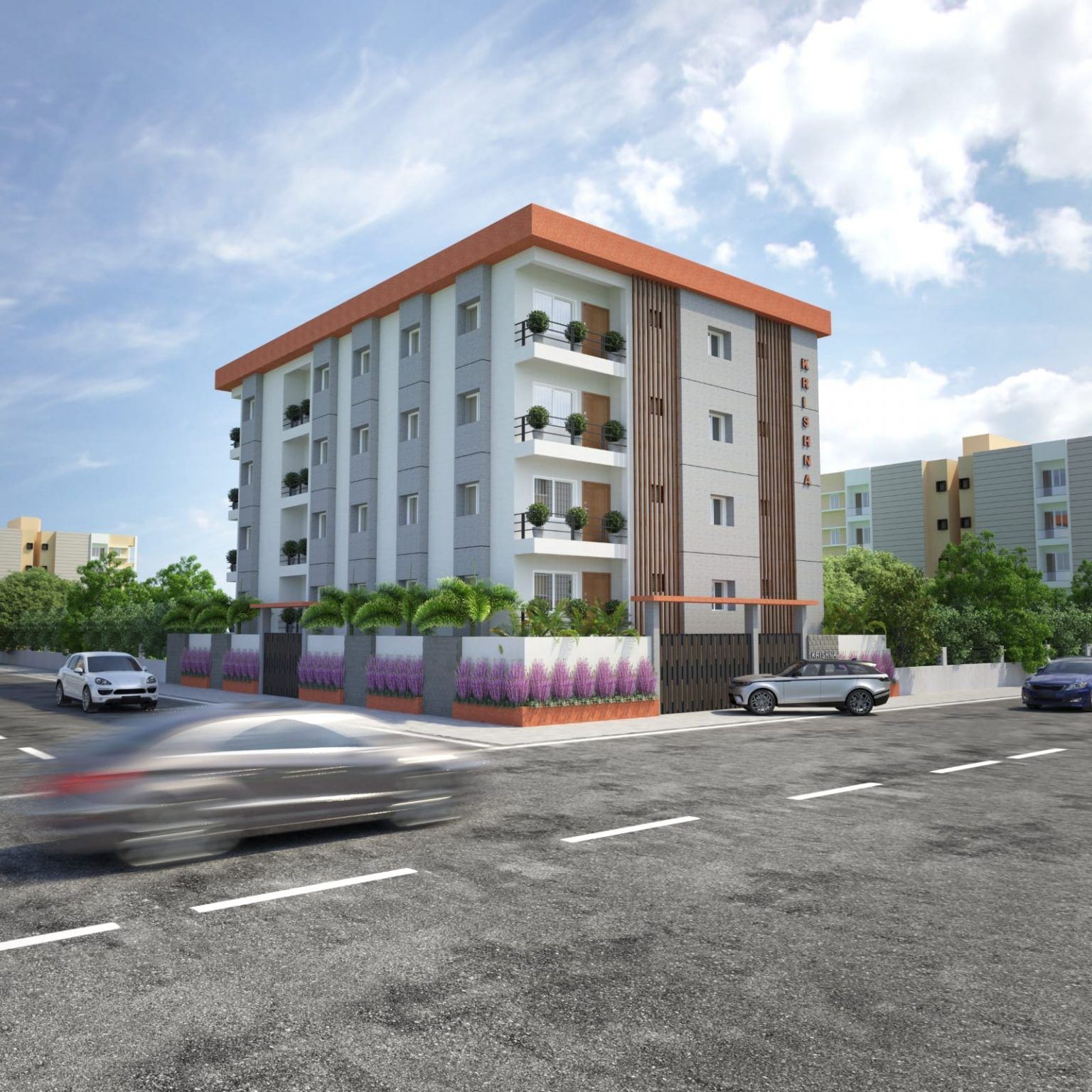
A homebuyer in Odisha should not judge a home only by photos, elevation, or sample flat decoration. The real value of a home is found in the quality of construction, waterproofing, service planning, common areas, documentation, and the developer’s willingness to answer questions clearly.
Whether someone is buying a villa in Phulnakhara, an apartment in Bhubaneswar, or a family home near Cuttack, the decision should be made with both emotion and inspection. A home should feel beautiful, but it should also feel safe, practical, durable, and transparent.
For families exploring premium villas near Bhubaneswar, Krishna properties and Developers encourages a practical site visit approach. Walk slowly. Observe carefully. Ask clearly. Verify documents. A confident home decision begins with quality awareness.
Quick Buyer Quality Check Box
- Look beyond paint and elevation.
- Check structure, waterproofing, drainage, services, and finishing.
- Visit during daylight and, if possible, after rain.
- Verify RERA and sanctioned plan details.
- Ask for clear answers before booking.
- Do not ignore dampness, cracks, hollow tile sounds, or poor slopes.
FAQs
1. What is the most important construction quality check before buying a home in Odisha?
The most important check is structural quality, followed by waterproofing, drainage, electrical and plumbing work, finishing quality, and legal documentation. Buyers should also verify RERA registration and approved plans.
2. How can a normal homebuyer check construction quality without technical knowledge?
A buyer can observe visible cracks, damp patches, tile alignment, floor slope, door-window fitting, ventilation, water flow, and common area planning. For deeper checks, buyers can take help from an engineer or experienced site inspector.
3. Why is waterproofing important for homes in Odisha?
Odisha receives heavy rain and has humid weather. Weak waterproofing can lead to seepage, damp walls, terrace leakage, bathroom leakage, paint damage, and high maintenance cost over time.
4. Should buyers verify RERA before checking construction quality?
Both are important. RERA verification helps buyers check official project details and accountability, while construction inspection helps them understand the physical quality of the home.
5. What should I ask the developer during a site visit?
Ask about material specifications, structural supervision, waterproofing method, drainage planning, electrical and plumbing provisions, possession process, RERA details, bank approval, and defect handling after possession.
6. Is bank approval enough to trust a project?
Bank approval adds one layer of scrutiny, but it is not the only check. Buyers should also review RERA details, approved plans, agreement terms, construction progress, site quality, and developer track record.
7. How does Krishna Downtown relate to this checklist?
Krishna Downtown, Phulnakhara is a project reference for buyers exploring 3 and 4 BHK villas near Bhubaneswar. Buyers should use this checklist during a site visit to understand construction, community planning, documentation, and long-term comfort.
8. Can I check construction quality after possession?
Some issues can be checked after possession, but buyers should inspect as much as possible before booking and before final handover. Early questions help avoid confusion later.

Krishna Developers
Planning to buy a villa near Bhubaneswar?
- Explore Krishna Downtown, Phulnakhara, a premium gated villa community designed for families who value space, peace, greenery, and connectivity.
- Connect with the Krishna Developers team to understand project details, location advantages, RERA information, and site visit options.